Arch Pain & Flat Feet
« Previous EntriesPlantar Fasciitis
Saturday, September 26th, 2009What is Plantar Fasciitis?
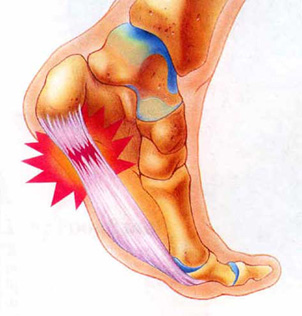
Plantar fasciitis is inflammation of the ligament that stretches from the back of the heel to the ball of the foot. Known as the plantar fascia ligament, it is responsible for supporting the arch of the foot. It is one of the most common conditions that affect the feet, occurring in about 10% of all Americans at some point in their lifetime. Reportedly, some two million Americans seek treatment each year.
What are the symptoms of Plantar Fasciitis?
Pain, located at the bottom of the heel, is the most common symptom. The pain is often most intense during the early morning, accompanying the first few steps of the day. Difficulty flexing the foot so that the toes point upwards in the direction of the shin is another symptom, although many people do not notice the stiffness, as it occurs gradually over time.
What Causes Plantar Fasciitis?
In athletes and runners, the cause is often inadequate stretching. In non-athletes, the condition is more common in people that are overweight.
Standing or walking for many hours during the day is a common cause. It is sometimes a work-related injury. Running, especially in shoes with little or no arch support, can eventually cause the ligament to become overstretched. The arches can fall and pain is the result.
Flat feet and fallen arches can cause plantar fasciitis, although the pain from fallen arches may affect the entire foot. In plantar fasciitis, the pain is focused primarily on the bottom of the heel. High arches can cause the problem, too.
Although they are not believed to be a cause, heel spurs are often found to accompany plantar fasciitis. Spurs are bone deposits that form on the heel bone. They can form on the back or bottom of the heel bone. When they accompany plantar fasciitis, they are usually found on the bottom of the heel bone.
How is Plantar Fasciitis Treated?
Surgical procedures can release the tension, but they are accompanied by numerous risks, which include injury to the nerves, infection and rupture of the ligament. In addition, surgery does not always reduce or relieve the pain. So, it is typically chosen as a last resort.
Injection of corticosteroids or the use of non-steroidal anti-inflammatory drugs (NSAIDs) is sometimes chosen to relieve pain, but those treatments are of limited benefit. Side effects are a problem, as is damage that can be done to the liver, with continued use of NSAIDs.
The best choices for treatment are those that do not involve drugs or surgery. If you suffer from the condition, here’s what you should do.
- Choose comfortable supportive shoes, designed specifically for your activities—orthopedic shoes are a good choice
- Use a brace that can be worn underneath the shoe to provide additional support for the plantar fascia tendon—Foot Smart is a good brand
- Use a special brace at night, when the muscles tend to tighten up, causing pain in the morning—the Passive Night Splint provides relief for many people
- Arch cushions and insoles to be used in your own shoes are another option
If you follow these steps, you should notice an improvement in your plantar fasciitis in a very short time.
Hammertoes
Sunday, September 13th, 2009What are Hammertoes?
A hammertoe is a deformity that can occur from a number of causes. It is so called, because the toe(s) resemble a hammer. They are permanently bent at the joints, rather than lying normally.
While this deformity can occur on any toe, it is most common on the second, third or fourth toe and affects the joint closest to the end of the toe.

A similar condition is mallet toe, which affects the upper joint, closest to the foot. If the joints of the pinky or big toe are affected, it is a different condition.
What are the Symptoms of Hammertoes?
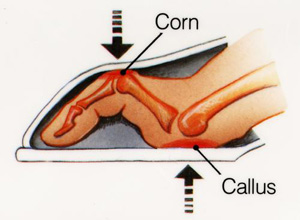
Other than the deformity, there may be pain, chafing, blistering, corns, calluses or other forms of irritation caused by one toe leaning against the other or by the way the joints press against footwear. If the condition is allowed to worsen, walking can become painful and difficult.
What are the Causes of Hammertoes?
A muscle imbalance from an unnatural walk, painful conditions affecting the bottom of the foot, such as corns, plantar warts or calluses, poorly fitting shoes, flat feet and high arches are among the most common causes. In addition, the deformities may accompany arthritis, stroke, Charcot-Marie-Tooth disease and diabetes.
How Can Hammertoes Be Treated?
There are many suggestions for successfully treating hammertoes. Buying new shoes with soft, spacious toe boxes is the first order of business. Avoid high heels and other styles with unnatural narrow, pointed toes.
It is possible to be stylish without cramping your feet. Shoes by Aetrex, Beacon and Arcopedico are stylish and dressy, yet comfortable and foot-friendly.
Treating problems, such as corns and calluses, is the next order of business. If the toes are curling in order to take pressure off of a painful area on the bottom of the foot, addressing that issue will allow the toes to gradually straighten. Gel comfort insoles, corn pads, callus removers or a trip to the podiatrist to treat a wart could be beneficial.
If the problem is caused by a problem with the arch that puts too much pressure on the joints of the toes, arch supports may be beneficial. Shoe inserts, as well as custom orthotics are available from Foot Smart.
Once the cause of the issue is addressed, toe trainers and straighteners can be used at home to realign the joint, before the deformity becomes severe. Hammertoe straighteners from Foot smart are affordable, help to correct the problem and provide pain relief, in the meantime.
Toe exercises can be done at home, too, to stretch and strengthen the muscles. One simple exercise is to use the toes to pick up small objects off of the floor. If the muscles are not quite that strong, lay a towel flat on the floor and use your toes to crumple it. The muscles will get stronger as time goes by and that will help to straighten out the joint.
If physical therapy or at-home straighteners are ineffective, orthopedic surgery may be necessary to correct hammertoes. But, that’s a last resort.
Foot & Heel Pain
Friday, September 11th, 2009Foot & heel pain can be caused by a number of different conditions. But, the most common cause is wearing poor-fitting (or poorly designed) shoes.
Whether or not you spend a great deal of time on your feet, it is important that your arches are properly supported, that the shoe is wide enough and that the heels are not too high.
High-heeled pointy toed shoes cause more aches and pains than just the ones experienced in the feet. The knees, hips and back can suffer as well.

On the other hand, well-fitting, well-designed shoes can resolve those problems, help to tone your legs and improve your posture.
Below, you will see a list of conditions that will cause foot & heel pain, a brief description, other symptoms that are associated with the condition, if applicable, and the causes.
Treatments for these conditions are listed here or on other pages of this website.
Pain-relieving drugs are often taken, but they are accompanied by unwanted side effects, of both a short and long-term nature, including liver damage.
The treatments listed here provide support, pain-relief and promote healing, without unwanted side effects.
Achilles Tendonitis
- Inflammation of the Achilles tendon
- Symptoms: pain primarily concentrated in the heel area, when standing or during physical activity
- Causes: overuse, poor training
- Recommended treatments: listed on the Achilles Tendonitis page of this website
Arthritis
- Damage to the joints accompanied by inflammation
- Symptoms: knee, ankle, foot & heel pain, sometimes accompanied by redness, swelling or enlargement of the joints
- Causes: multiple causes, depending on the type
- Recommended treatments and products: anti-inflammatory creams, such as DynaFreeze, shoe orthotics or removable insoles, shoe stretchers to accommodate enlarged joints, foot and ankle supports and orthopedic footwear
Bursitis
- Inflammation of the shock-absorbing cushions that protect the joints from injury
- Symptoms: pain and swelling, particularly in the morning, can affect any joint of the foot or heel, as well as other parts of the body
- Causes: overuse, repetitive motion, such as occurs during running; inappropriate hiking, running or walking shoes
- Recommended treatments and products: HTA pain relief spray, DynaFreeze anti-inflammatory cream, Sol Step to reduce pressure in the heel area, silicone insoles and orthopedic footwear
Charcot Foot
- Deformity of the feet, characterized by high arches, hammertoes and loss of strength
- Symptoms: before deformities become apparent, swelling, foot & heel pain and/or redness is noticed in the toes and other joints of the feet
- Causes: Genetic defects, diabetic neuropathy and diseases involving the nerves
- Recommended treatments and products: adjustable slip-on shoes, such as those made by Drew
- Read more about Charcot Foot
Cuboid Syndrome
- Chronic strain, partial dislocation or inflammation of the joints or ligaments in the area of the cuboid bone, which along with the calcaneus is responsible for lateral (side to side) foot stability
- Symptoms: pain near the outer or inner edges of the feet, sometimes radiating from one side to the other; general weakness of the feet
- Causes: improperly healed injury to the joints, ligaments or bones of the foot; repetitive injury or motions; landing from a jump; inappropriate athletic shoes
- Recommended treatments and products: manipulation of the foot by a trained podiatrist; custom orthotics; insoles; appropriate athletic shoes, such as Wellness Shoes
Diabetic Neuropathy
- Damage to the nerves of the feet
- Symptoms: foot & heel pain, tingling, numbness, burning sensations
- Cause: a complication of diabetes
- Recommended treatments and products listed on the diabetic neuropathy/diabetic foot care page
Fallen Arches/Flat Feet
- Conditions in which the arch of the foot is weak, damaged, collapsed or non-existent; the foot lays flat on the floor, rather than arching in the middle
- Symptoms: varies from no pain, at all, to pain in the feet and calves to reduced ability to walk
- Causes: genetic, the arch never developed, injury, illness, prolonged stress on the foot
- Recommended treatments and products: arch braces, such as those made by Foot Smart, custom orthotics, cushion insoles, appropriate shoes
Fatigue/Overuse/High Heels
- The most common causes of foot & heel pain
- Recommended treatments and products: rest; wearing appropriate shoes; soaking in a foot bath, such as the Hot Spa Ultimate; massage, a variety of massagers are available from Foot Smart, including the Total Leg and Foot Massager, which improves circulation and promotes healing

