Foot & Heel Pain
« Previous EntriesPlantar Fasciitis
Saturday, September 26th, 2009What is Plantar Fasciitis?
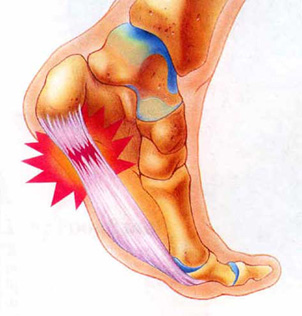
Plantar fasciitis is inflammation of the ligament that stretches from the back of the heel to the ball of the foot. Known as the plantar fascia ligament, it is responsible for supporting the arch of the foot. It is one of the most common conditions that affect the feet, occurring in about 10% of all Americans at some point in their lifetime. Reportedly, some two million Americans seek treatment each year.
What are the symptoms of Plantar Fasciitis?
Pain, located at the bottom of the heel, is the most common symptom. The pain is often most intense during the early morning, accompanying the first few steps of the day. Difficulty flexing the foot so that the toes point upwards in the direction of the shin is another symptom, although many people do not notice the stiffness, as it occurs gradually over time.
What Causes Plantar Fasciitis?
In athletes and runners, the cause is often inadequate stretching. In non-athletes, the condition is more common in people that are overweight.
Standing or walking for many hours during the day is a common cause. It is sometimes a work-related injury. Running, especially in shoes with little or no arch support, can eventually cause the ligament to become overstretched. The arches can fall and pain is the result.
Flat feet and fallen arches can cause plantar fasciitis, although the pain from fallen arches may affect the entire foot. In plantar fasciitis, the pain is focused primarily on the bottom of the heel. High arches can cause the problem, too.
Although they are not believed to be a cause, heel spurs are often found to accompany plantar fasciitis. Spurs are bone deposits that form on the heel bone. They can form on the back or bottom of the heel bone. When they accompany plantar fasciitis, they are usually found on the bottom of the heel bone.
How is Plantar Fasciitis Treated?
Surgical procedures can release the tension, but they are accompanied by numerous risks, which include injury to the nerves, infection and rupture of the ligament. In addition, surgery does not always reduce or relieve the pain. So, it is typically chosen as a last resort.
Injection of corticosteroids or the use of non-steroidal anti-inflammatory drugs (NSAIDs) is sometimes chosen to relieve pain, but those treatments are of limited benefit. Side effects are a problem, as is damage that can be done to the liver, with continued use of NSAIDs.
The best choices for treatment are those that do not involve drugs or surgery. If you suffer from the condition, here’s what you should do.
- Choose comfortable supportive shoes, designed specifically for your activities—orthopedic shoes are a good choice
- Use a brace that can be worn underneath the shoe to provide additional support for the plantar fascia tendon—Foot Smart is a good brand
- Use a special brace at night, when the muscles tend to tighten up, causing pain in the morning—the Passive Night Splint provides relief for many people
- Arch cushions and insoles to be used in your own shoes are another option
If you follow these steps, you should notice an improvement in your plantar fasciitis in a very short time.
Heel Spurs
Tuesday, September 15th, 2009What Are Heel Spurs?
A spur is a calcified bone deposit that can occur on any bone of the body.
A spur on the heel, detected by X-ray or through physical examination, is actually a calcification on the calcaneus, sometimes referred to as the “heel bone”, which combines with the talus to form the back of the foot.
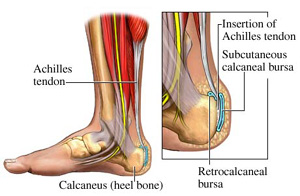
A spur may form on the bottom of the calcaneus, just above the ligament that supports the arch of the foot, known as the plantar fascia. Or, it may form on the back of the calcaneus, just below the spot where the Achilles tendon attaches to the bone.

What Are the Symptoms of Heel Spurs?
The spur itself is not painful, but the location of the deposit can cause pain in other portions of the foot.
Spurs on the bottom of the heel bone are commonly associated with a condition known as plantar fasciitis (inflammation of the plantar fascia), which affects several million Americans annually.
If the spur is accompanied by plantar fasciitis, pain is most severe during the first few steps of the day and occurs on the underside of the heel.
If the spike forms on the back of the calcaneus, it can cause pain in the Achilles tendon and lead to tendonitis. If the deposits are large, they can cause irritation of the skin, due to increased pressure against the shoe.
What Causes Heel Spurs?
A spur is a symptom of the body’s desire to repair itself. Extra bone is added over time, as long as we are healthy and well nourished.
In some cases, the extra bone forms in an isolated spot due to pressure, rubbing or stress that occurs over a long period of time.
Women that frequently wear high-heeled shoes and pumps are prone to have spurs on the back of the heel-bone due to the tightness and pressure. This is so common that the spurs are sometimes called “pump bumps”
Plantar fasciitis can cause the bony deposits. As the ligament becomes tight and pulls on the heel, the bone attempts to make repairs and the deposit forms.
How Are They Treated?
Heel spurs must sometimes be removed in order to treat severe or chronic Achilles tendonitis. Removal is not normally recommended for plantar fasciitis; instead, the plantar fasciitis is treated.
Avoiding shoes that are tight in the heel area is helpful, as is choosing styles that hit at a lower or higher point than the location of the spur.
Air or gelatin cushioned insoles provide pain relief and help to support the arch, which helps to heal plantar fasciitis, too.
Some of the products that are recommended include Foot Smart Plantar Fasciitis Support. The brace provides additional support for the arch of the foot and the ankle. The Plantar FXT helps to stretch the plantar fascia ligament, relieving the tightness that puts pressure on the heel.
Heel spurs will not go away, but they do not need to cause pain. Wearing appropriate shoes and cushiony insoles is the key to being pain-free.
Heel Bursitis
Monday, September 14th, 2009What is Heel Bursitis?
The bursas are small fluid-filled sacs that act as cushions between the bones, tendons, muscles and joints of the body. There are many bursas throughout the body.
Bursitis is simply inflammation of the bursa. In heel bursitis, the bursa separating the Achilles tendon from the joints, bones or the muscles of the lower foot are inflamed.

What Are the Symptoms of Heel Bursitis?
The symptoms include localized pain and/or stiffness in the back of the foot or heel, which may make it difficult to move the ankle from side to side or simply to walk. As with other types of inflammation, there may be redness or swelling, which can make it difficult to wear shoes.
What Causes Heel Bursitis?
In most cases, the cause is repetitive movements or excessive pressure on the bursa, such as might occur during a sporting event. A traumatic injury, such as landing on the heel from a high jump can put too much pressure on the bursa, causing them to spread out.
As the inflammation and swelling continue, the muscles, joints and tendons can start to press on the bursa, causing further inflammation. So, the condition can worsen, without additional injury.
Rheumatoid arthritis, which causes joint deformities, can cause increased pressure on the bursa and lead to bursitis. But, rheumatoid arthritis typically affects other joints of the body first, such as those of the fingers and toes.
The term may also be used to refer to any non-specific pain in the heels of no known cause. So, if you receive a diagnosis of heel bursitis, the cause may be simply “unknown”.
How is Heel Bursitis Treated?
Rest, elevation and ice to reduce the swelling are the first steps. Acute cases should be treated in order to prevent the condition from becoming chronic. In other words, when you notice the pain, take it easy for a while. Continued stress and movement can make the problem worse.
DynaFreeze is a topically applied, all-natural pain-relieving ointment containing menthol and yerba mate. This is the recommended form of treatment for areas that are difficult to ice down.
As it may be impossible to cut out daily activities until the pain subsides, DynaFreeze can be used during the day to relieve pain that accompanies walking or other physical activities.
Heel pads and/or silicone insoles may be beneficial for heel bursitis, as well. There’s no need to suffer. Help is available.
« Previous Entries
