Arch Pain & Flat Feet

Next Entries »

Custom Orthotics

Sunday, September 6th, 2009

What Are Custom Orthotics?

Orthotics is actually the medical field relating to the design, development, manufacturer or fitting of devices designed to provide additional support or correct imbalances in the muscles or bones of the body.  But, the term “orthotics” is also used to refer to the devices created by those professionals. 

Custom orthotics are devices that are sized to fit a specific person.  When it comes to the feet and lower body, appliances that fall under the heading of custom orthotics include shoes, braces and insoles of various types. 

What Are Custom Orthotics Used For?

Insoles may be used to:

Braces may be used to provide additional support for the knee or ankle.  In some cases, the braces are therapeutic; used to provide compression or cold therapy.  Special braces for the toes are used to separate and straighten.

Therapeutic or orthopedic shoes may be used as an alternative to insoles.  They can provide many of the same benefits.

Who Could Benefit from Custom Orthotics?

Many people can and do benefit from custom orthotics.  Practically anyone could benefit from an insole, but there are specific conditions that can be relieved with an orthotic device. 

Custom orthotics may also be beneficial for arch, ball of foot, heel, ankle, knee, hip or back pain.  Healthy pain-free feet provide the right foundation for a healthy pain-free lower body.

  • Share/Bookmark

Chondromalacia or Runner’s Knee

Friday, September 4th, 2009

What is Chondromalacia?

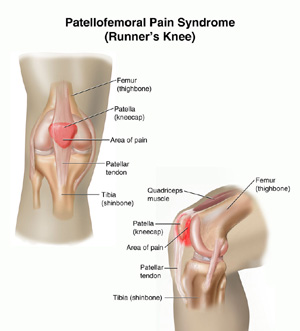
Chondromalacia translated literally means soft cartilage.  The term “chondromalacia- patellae” (CMP) means soft cartilage under the knee cap. 

Although some doctors still use the term to refer to runner’s knee, it is gradually being replaced by the term “Patello-femoral pain syndrome”, because it more accurately describes the affected area.  The patella-femoral region encompasses the bones, joints, tendons, ligaments and muscles of the knee. 
Chondromalacia or Runner’s Knee

What are the Symptoms of Chondromalacia?

The primary symptom is non-specific pain in the front, behind or around your knee.  It may cause limping and the pain may extend into the muscles of the upper leg. 

Usually the pain occurs during any activity.  Although we may think of it as “runner’s” knee, just walking around can be painful.  In most cases, the severity of the pain increases when walking up or down stairs. 

You may have problems bending your knee.  The area may feel warm to the touch.  There may even be pain when you are at rest.  Swelling sometimes occurs, but not always.    

What Causes Chondromalacia?

Injury or overuse is the most common cause.  But, there are many other conditions that can cause pain in the knee area, include tight hamstrings, quads and/or calf muscles. 

Misalignment of the knee cap, bowed legs, knocked knees or flat feet could be the underlying cause.  Irritation or inflammation of the joints or soft tissues underneath the knee cap may have occurred due to overuse, being overweight or due to arthritis. 

In some cases, the pain does not originate in the area, but is caused by hip or back problems.  Any problem that affects the feet can cause knee pain.  Wearing the wrong shoes for sports or other activities can cause knee pain, too.

How to Treat & Prevent Chondromalacia

If the pain is due to overuse, the RICE method of treatment is most commonly recommended.  RICE is an acronym for rest, ice, compression and elevation.  Most people understand rest, ice or cold compresses and elevation.  But, compression may be a new term for many.

When it comes to acute (due to injury or a single incident of overuse) or chronic (pain occurs frequently over time due to frequent overuse or another cause) knee pain, the idea of compression is to provide additional support to the knee joint.  ACE bandages are sometimes recommended for acute pain, but they are uncomfortable and limit mobility. 

Knee Braces and Supports

A knee wrap, strap or brace provides support and compression, without limiting mobility.  They can be worn during sports or other physical activities.  Magnets and gels are sometimes included to provide additional therapeutic benefits. 

Cho-pat, Royce, KneedIT and Wellgate are some of the brands available.  KneedIT braces provide support under the knee cap.  The Cho-pat Dual Action Knee Strap provides support underneath, above and behind. 

Royce and Wellgate brands provide all around support, as well.  The braces cover a larger portion of the knee area. 

Wellgate is designed for women and includes a gel support that contributes to normal knee movement.  The Royce Wraparound Hinged Knee-brace provides maximum support for the outer knee area with aluminum inserts.

Use the Right Shoes

In addition to wearing a brace to relive the pain of chondromalacia, be sure that your shoes are properly designed for your activities.  Replace them when they start to wear down and be sure that they fit well, too.

  • Share/Bookmark

Arch Pain & Flat Feet

Monday, August 31st, 2009

Fallen Arches, Arch Pain & Flat Feet

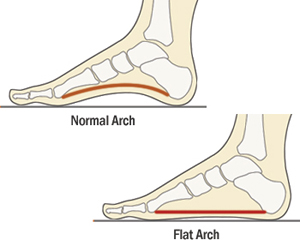
Fallen arches and flat feet are ultimately the same condition.  It’s just that some people are born with flat feet, while others develop them in adulthood. 

In most of the population, the arch of the foot does not rest on the ground when a person stands.  In approximately 20-30% of the population, the arch of the foot never develops.  The entire sole of the foot lies flat, when a person stands.

A person could be flat-footed in one or both feet.  The condition is sometimes referred to as pes planus. 

Arch Pain & Flat Feet—the Causes

Babies and small children normally have flat feet.  The arch develops between the ages of four and six.

If the arch “falls”, causing the foot to flatten out, after a person reaches adulthood, the cause could be injury, illness, stress or pregnancy.  It can also occur gradually as part of the aging process.

Arch pain that is unrelated to flat feet can be caused by poor fitting shoes, high heels, injury or plantar fasciitis. 

Arch Pain & Flat Feet—the Effects

If a person is born with flat feet or their arches never develop, there may be no detrimental effect.  Running speed is not affected and there is usually no pain.  When the arches fall in later life, it is accompanied by a great deal of pain.    

In both cases, there may be pain in the ankles, knees, hip and lower back, because there is less support and the feet tend to turn out at the ankle.  Pain in the inner border of the foot is common, as well.    

Arch Pain & Flat Feet—Preventative Measures

At one time, parents were told that infants and toddlers should wear shoes at all time to prevent flat foot.  The latest research indicates that going barefoot actually strengthens the arch.  In all but the worst cases, walking barefoot on a sandy beach or similar terrain on a regular basis gives the feet a good workout and strengthens the arches.

Of course, going barefoot can lead to injury.  So, wearing properly fitted shoes with good arch support and low heels is the best solution and may help prevent adult cases of painful fallen arches.

Arch Pain & Flat Feet—Treatments

Orthotics, arch supports, braces and comfort insoles, combined with appropriate shoes are the best treatments for flat feet, plantar fasciitis and for “plain old tired, aching feet”.

  • Share/Bookmark
Next Entries »